Glen Iris – MateSel Breeder Spotlight
Glen Iris Poll, a Merino stud based in the Southwest Slopes of NSW and is managed by Daniel and Fiona Rankin. The flock has transformed over the decades from a Corriedale to dual purpose Merino flock and began submitting data to Sheep Genetics four years ago, building on 30 years of performance recording and 60 years of sheep breeding experience. For them, integrating MateSel into their operation was the next logical step to improve their flock's genetics
“We’ve found ASBVs (Australian Sheep Breeding Values) incredibly useful for comparing animals across different age groups, as it removes non-genetic variation,” said Fiona. “Since using ASBVs, we’ve been able to fine-tune our joining decisions, focusing on the traits we want to maintain and those we want to improve.
With a solid foundation of data capture and pedigree recording, Glen Iris saw MateSel as a tool to streamline the selection process, reducing the complexity and time required to manually match ewes to rams and analyse dat
“We found MateSel to be a valuable starting point, which we then further fine-tuned,” Fiona explained. “The resulting progeny look incredibly even phenotypically. So far, we’re really happy with the results.”
Glen Iris's Breeding Objective
Glen Iris’s breeding objective focuses on producing animals with the following traits:
- Early growth, particularly post-weaning weight (PWT)
- Maintaining/reducing mature weight (AWT)
- Good carcass quality, having identify an option for Yearling Eye Muscle Depth (YEMD) and Yearling Fat (YFAT) within their flock.
- Increasing Yearling Clean Fleece Weight (YCFW) and reducing Yearling Fibre Diameter (YFD
- Increased weaning rate (WR), with additional emphasis on Ewe Rearing Ability (ERA) ERA (ewe rearing ability.
Having a defined breeding objective is essential when using MateSel, as it shapes the parameters that influence mating selection decisions.
Considerations when looking at the MateSel estimated progeny results
- MateSel does not account for multiples or dry. It assumes one alive lamb is the outcome of each mating it suggests.
- MateSel predicts progeny performance from a mid-parent breeding value (the average of the parent’s breeding vales for that trait) and the assumption that the progeny inherits evenly from the sire and dam. While a 50:50 inheritance is assumed, genomics shows that a progeny can inherit more genes from one parent than the other, up to a 40:60 difference. There will be variation on an individual level as to how close to their mid parent values progeny are across the flock.
- Additionally, the mid parent in MateSel is estimated at the time of the MateSel run, parent ASBV do change over time as more information (including progeny performance) are added to the analysis
- When actioning the joining results, there often will be changes and tweaks to the joining lists. Reasons can include
-
- Removal of a sire, due to illness or structural differences
-
- Management decisions made later to suit the practicality or season
-
- Back up joining’s may result in matings not specified by the MateSel outcomes, so results will differ
For example, when going through the matings and making final selection decisions some tweaking to the joining suggested by MateSel were done for Glen Iris. This ability to fine tune by using the back-up ram supplied or swapping ewes out based on structure is important to using the tool of MateSel to get the best outcome from your matings.
Results- the MateSel estimations and 2024 drop progeny results
Below is a summary of the results Glen Iris returned from their MateSel runs informing selection decisions compared to how the subsequent 2024 drop progenies ASBVs are.
Table 1 highlights the 2024 drop’s average ASBV for key traits as estimated using MateSel and compared to the 2023 drop results (favourable trends are highlighted in blue). The results indicated that genetic gains were made towards Glen Iris’s breeding objectives in most traits. Significant improvements were seen in traits such as fat, clean fleece weight, fibre diameter, and ewe rearing ability.
|
Trait |
Average 2024 drop genetic merit |
MateSel’s predicted outcome for the 2024 drop |
difference from 2023 drop |
|
PWT |
10.71 |
8.6 |
-2.11 |
|
YWT |
11.32 |
9.5 |
-1.82 |
|
YEMD |
2.14 |
2.27 |
0.13 |
|
YFAT |
0.32 |
0.69 |
0.37 |
|
YCFW |
10.62 |
12.63 |
2.01 |
|
YFD |
2.27 |
1.51 |
-0.76 |
|
WR |
0.24 |
0.23 |
-0.01 |
|
ERA |
0.02 |
0.04 |
0.02 |
With the performance recording and submission of data for the 2024 drop underway, ASBVs are now available on Glen Iris’s 2024 drop. Table 2 highlights the average of the 2024 drop ASBV results) compared to the average of the 2023 drop of Glen Iris (from the 7th of October 2024 MERINOSELECT run. These results showed improvement on the traits of importance for the breeding objective from the 2023 drop. There has been significant genetic gain in particular for clean fleece weight and fibre diameter.
|
Trait |
Average 2023 drop genetic merit |
Average 2024 drop genetic merit |
difference |
|
PWT |
10.71 |
10.5 |
-0.21 |
|
YWT |
11.32 |
11.33 |
0.01 |
|
YEMD |
2.14 |
2.18 |
0.04 |
|
YFAT |
0.32 |
0.62 |
0.3 |
|
YCFW |
10.62 |
13.21 |
2.59 |
|
YFD |
2.27 |
1.84 |
-0.43 |
|
WR |
0.24 |
0.25 |
0.01 |
|
ERA |
0.02 |
0.04 |
0.02 |
When comparing the progeny average results between the MateSel estimated performance and 2024 drop progeny we can see that the MateSel program was able to sufficiently predict what the 2024 drop progeny performance would be. PWT and WR exceeded expectation gaining a percentile band with the other key traits sitting within the expected results.
|
Trait |
MateSel’s predicted outcome for the 2024 drop |
Matesel ranking on percentile |
2024 drop genetic average |
2024 drop ranking on percentile |
|
PWT |
8.6 |
20 |
10.5 |
5 |
|
YWT |
9.5 |
30 |
11.33 |
30 |
|
YEMD |
2.27 |
20 |
2.18 |
20 |
|
YFAT |
0.69 |
40 |
0.62 |
40 |
|
YCFW |
12.63 |
80 |
13.21 |
80 |
|
YFD |
1.51 |
90 |
1.84 |
90 |
|
WR |
0.23 |
30 |
0.25 |
20 |
|
ERA |
0.04 |
40 |
0.04 |
40 |
Conclusion
For Glen Iris, MateSel has proven to be an effective tool in improving the accuracy and efficiency of their breeding decisions. By using the software to guide mating choices, they’ve seen promising results in their flock’s genetic progress. As with any tool, understanding how to adapt the software’s recommendations to fit their operation is crucial to achieving the best outcomes.
 |
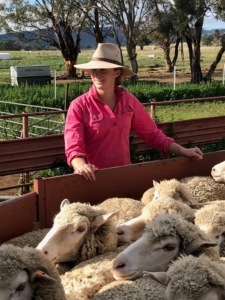 |
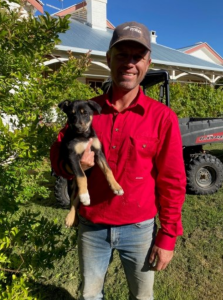
Image: Daniel and Fiona Rankin