Shedding light on new breeding values
When producers transition to shedding sheep enterprises – in a quest for easy-care prime lambs maintaining quality and genetic gains in their existing breeding objective traits can be a challenge.
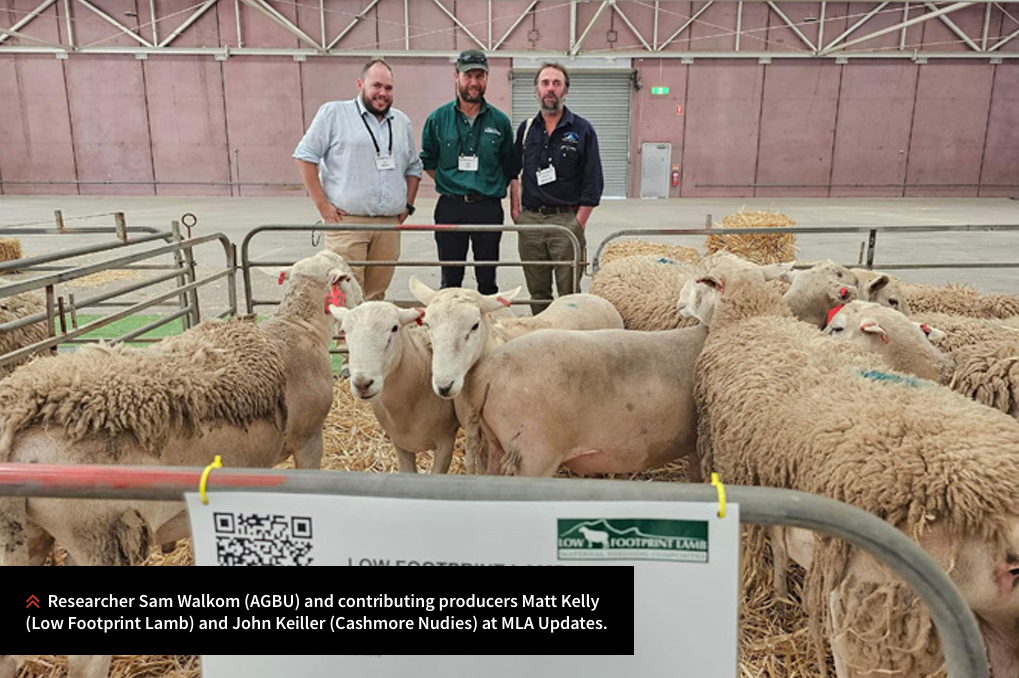
To overcome this, MLA has partnered with the Animal Genetics and Breeding Unit (AGBU) at the University of New England, to develop a breeding value. This value will allow producers to not only accurately select for animals which are going to shed their fleece, but will also provide an understanding of when, how quickly and where on the body it will shed. Lead researcher Dr Sam Walkom said the demand for this information reflects the changing landscape of the sheep industry. “We’re seeing a shift within the industry towards shedding animals,” Sam said. “I don’t think it will ever grow to the point where they are the whole industry, but it’s a response to the high cost of shearing and the relatively lower value for higher micron wool at the moment. “A lot of the producers moving towards the shedding breeds are looking for lower input and easier management. For those specialising in lamb meat production, wool can in some ways be seen as a nuisance. “You can either accept that it’s a cost you have to deal with or look to move away from those requirements.” This growing demand for shedding sheep presents a challenge for breeding in new characteristics without losing the genetic gain achieved over many years.
Getting under the skin
The project will include understanding how shedding interacts with other important production and health traits, by identifying genetic correlations between new shedding traits and currently available Australian Sheep Breeding Values (ASBVs) such as growth, carcase traits and eating quality.
“I think the breeding value we’re trying to build will be highly valuable to sheepmeat producers looking to transition down the shedding pathway,” Sam said. “It will give them the capacity to have a balanced breeding objective that maximises genetic gain for productivity, but also maintains a consistency of shedding performance within their flock.”
Currently, producers trialling this transition on their own flocks are relying on phenotypic selection – this involves visually observing their sheep to identify suitable shedding patterns, which is not only a reflection of generic merit, but the environment they live within. As shedding is linked with day length, relying on phenotypically selecting sheep during a period where sheep are not expressing shedding may lead to the selection of animals with poor genetic merit for shedding. Also, without understanding the genetic correlations between shedding and other important production traits like growth and eating quality, visual selection for shedding may inadvertently result in selecting animals with poor genetic merit for such important production traits. “You can breed through phenotypic selection, but progress will be slower and selection will potentially not be as accurate as you want,” Sam said. “Breeding values allow us to improve the accuracy of that selection. The selection will be on genetic merit alone, rather than clouded by any environmental triggers.”
The ASBV is still being developed and is expected to be available to industry in early 2027, however updated scoring protocols and research breeding values will be delivered prior to this.