During 2025–26, a total of 1,074 sheep flocks and 7 goat herds renewed or commenced participation in Sheep Genetics. These members contribute data to the LAMBPLAN, MERINOSELECT and KIDPLAN evaluations, receiving objective genetic information to guide breeding and selection decisions. LAMBPLAN continued to be the most widely adopted evaluation, with almost two-thirds of all flocks participating in the program.
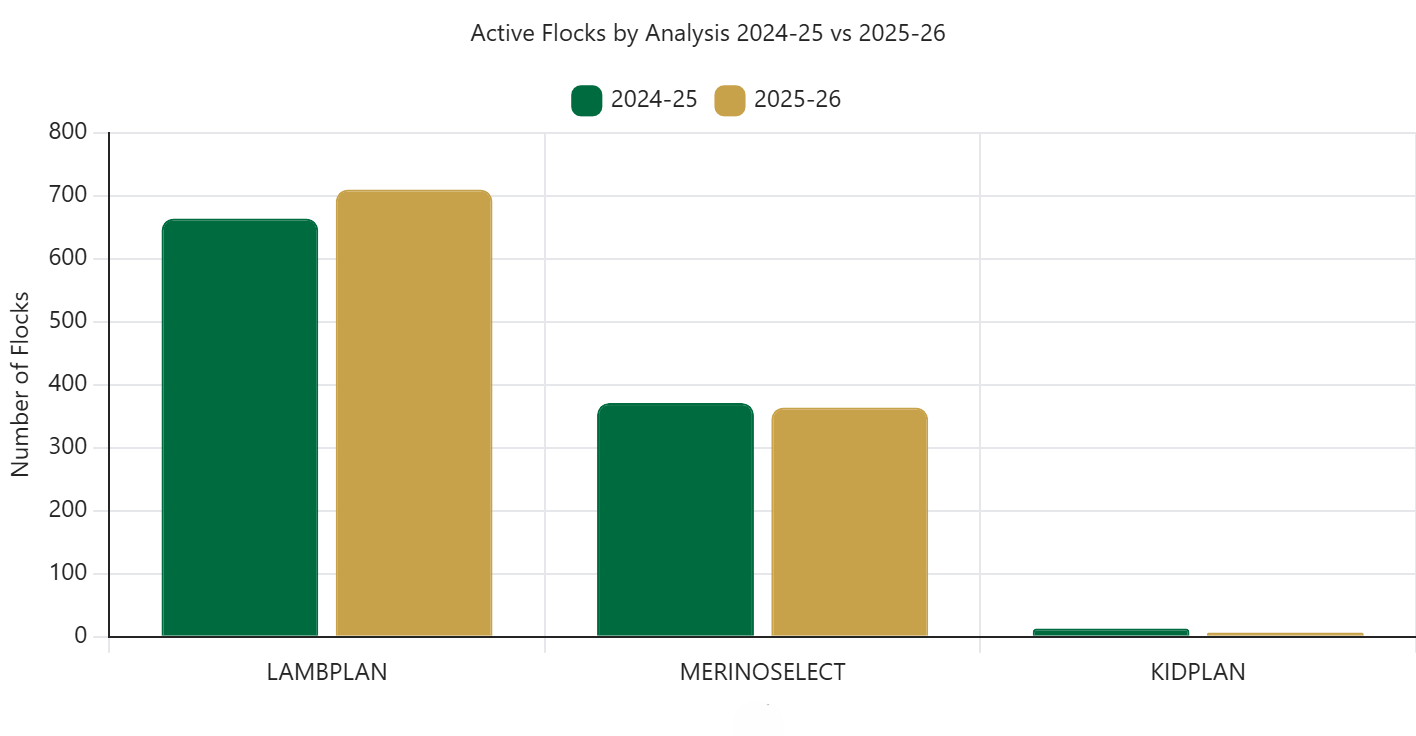
Figure 1. Breakdown by analysis compared to FY24-25
Australian flocks continue to form the foundation of the evaluation system, in addition, 46 international flocks participated through LAMBPLAN and MERINOSELECT, contributing data from production systems beyond Australia. By maintaining genetic links to Australian flocks through the use of Australian genetics and performance recording, international members help strengthen the connectedness of the evaluation and enable genetic comparisons across countries. This growing global participation highlights the value and reputation of Australian sheep genetics in both domestic and international markets.
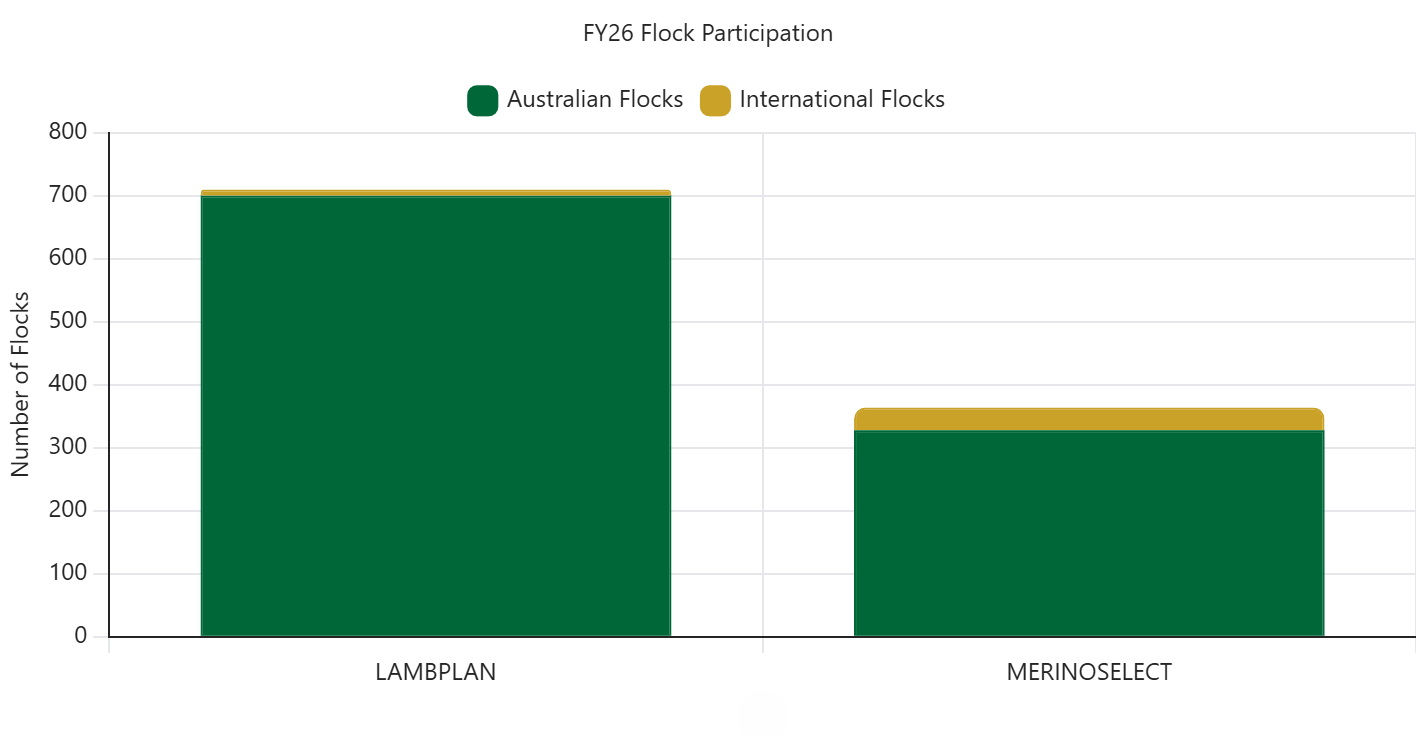
Figure 2. Australian and International flock participation by analysis
Sheep Genetics continues to deliver genetic evaluation services to the National Sheep Improvement Program (NSIP) in the United States, providing Estimated Breeding Values (EBVs) to participating sheep producers. These evaluations support more informed breeding decisions, drive genetic improvement, and help maintain valuable links between Australian and US markets.
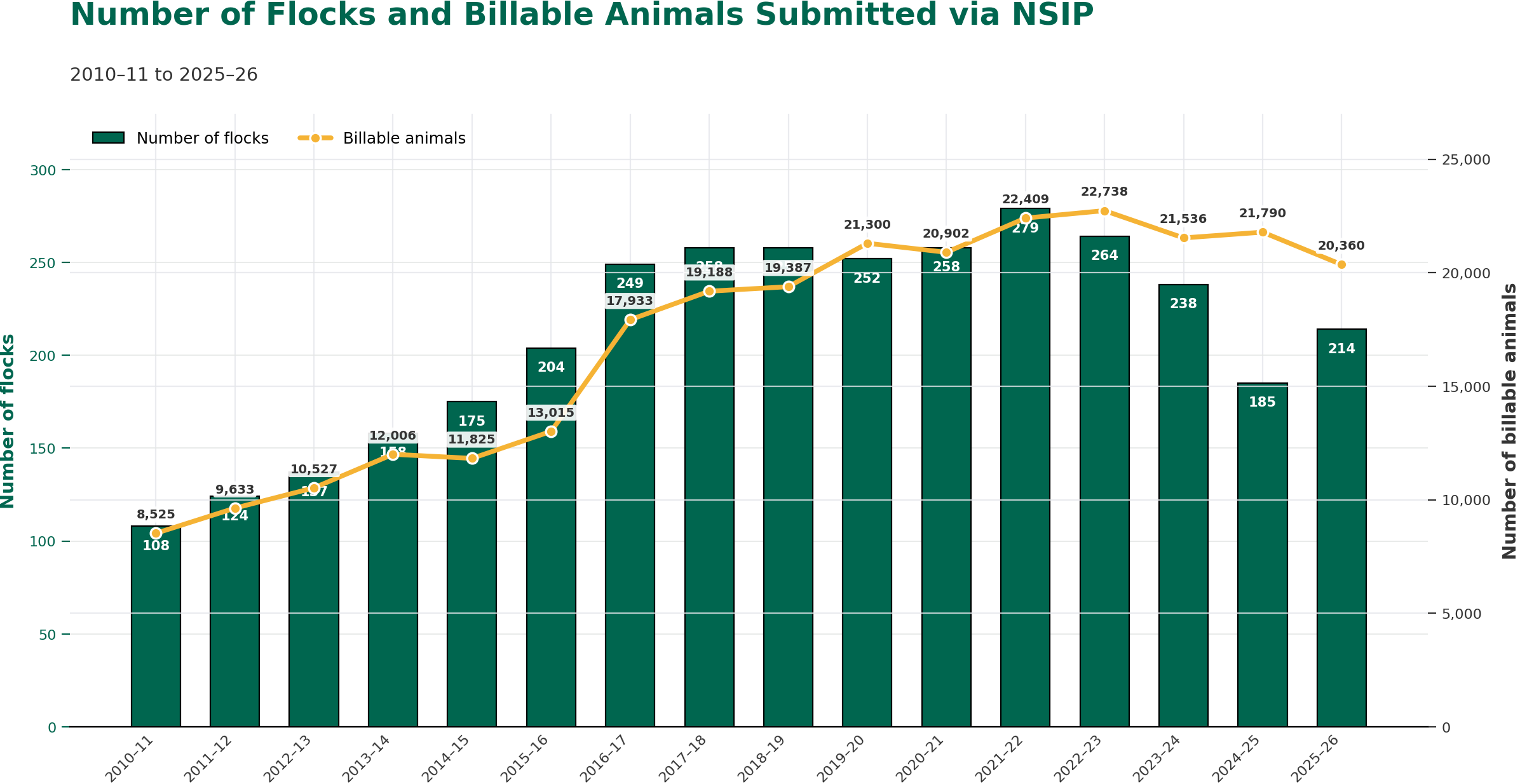
Figure 3. Total number of flocks and billable animals submitted via the NSIP independent evaluations since 2010
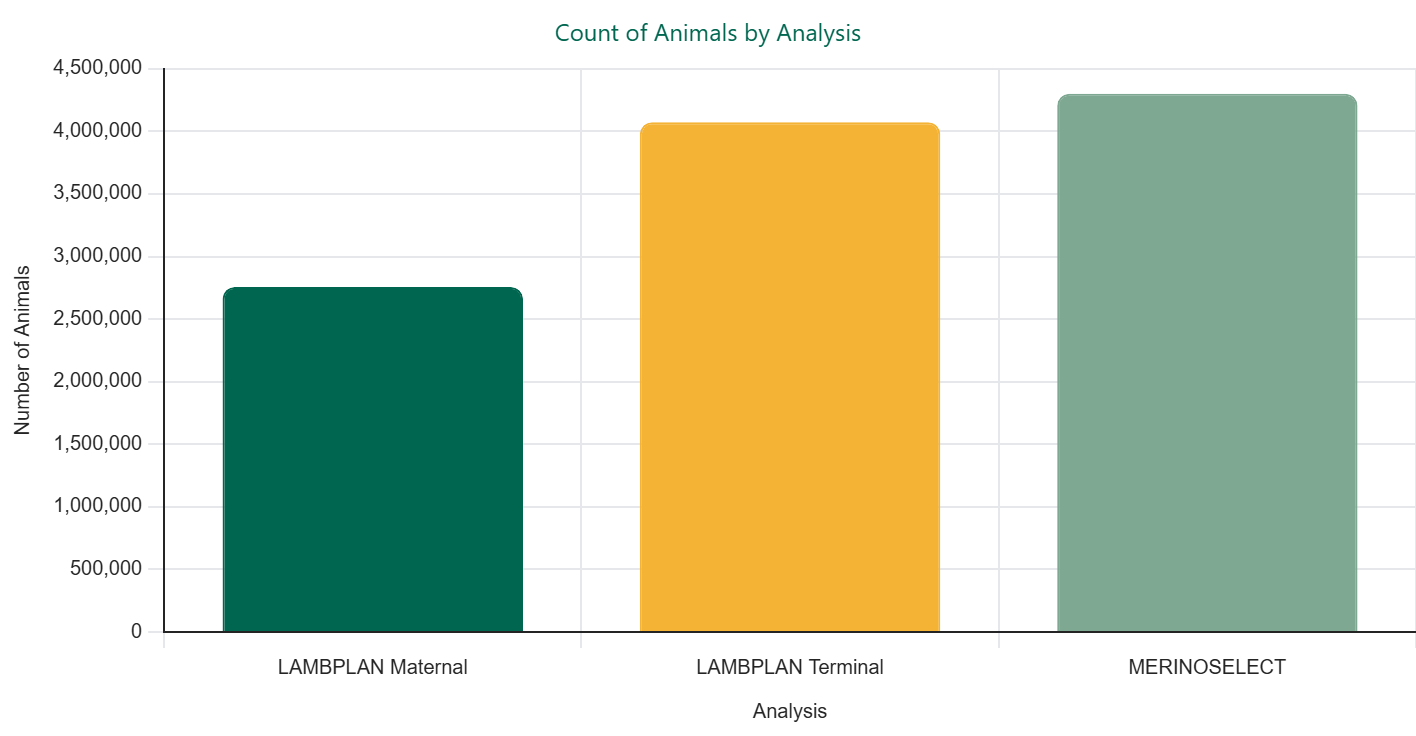
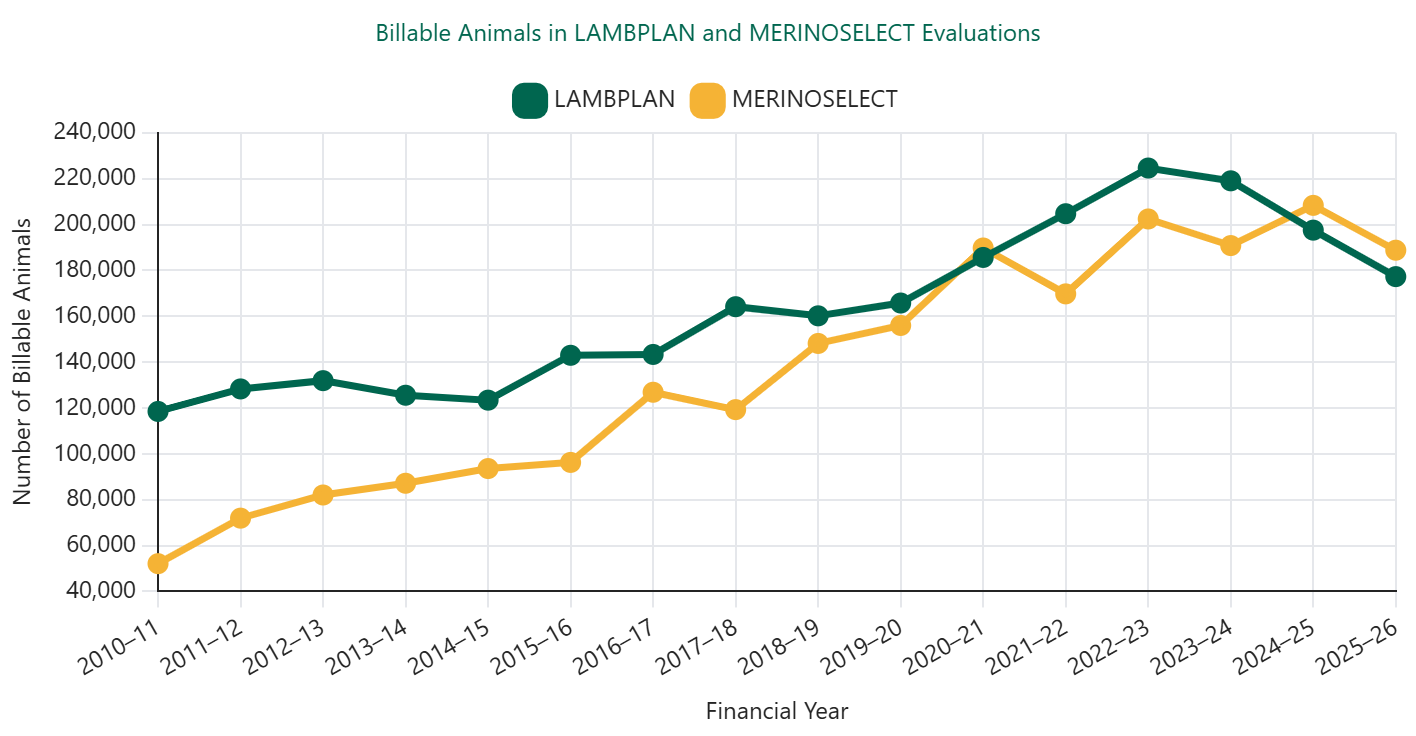
The Sheep Genetics evaluations continue to grow, providing breeders with access to one of the world's largest sheep genetic evaluation systems. At the end of 2025–26, more than 11 million animals were represented across the MERINOSELECT and LAMBPLAN evaluations, supporting robust genetic benchmarking and informed selection decisions. Figure 4 shows the animals by analysis and figure 5 highlights the trend in billable animals submitted to the evaluations since 2010–11.


Figure 5. Number of billable animals in both the LAMBPLAN and MERINOSELECT genetic evaluations since 2010
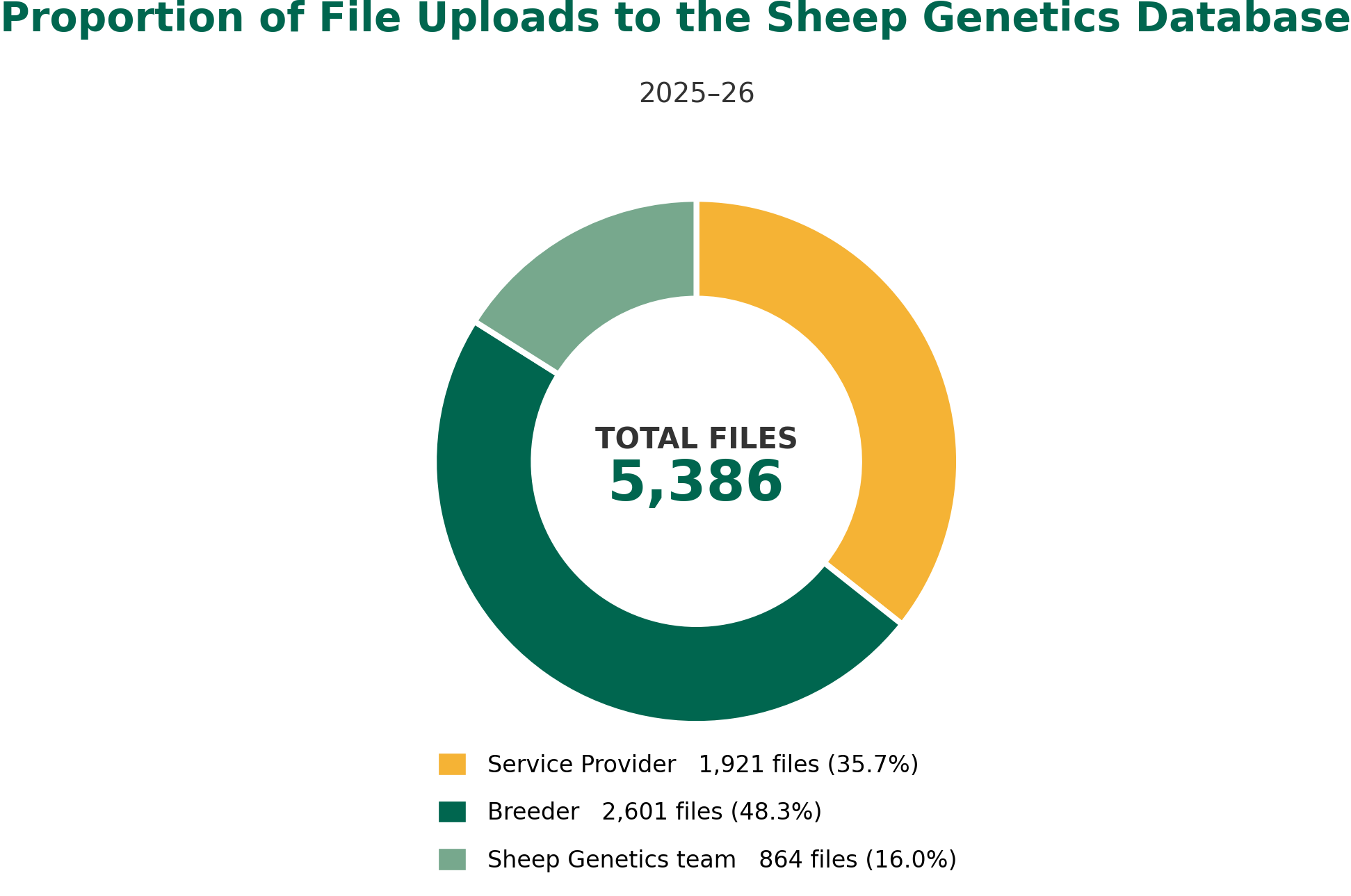
Australian Sheep Breeding Values (ASBVs) are re-estimated by Sheep Genetics every two weeks, providing breeders with regular access to the latest genetic evaluation results. Throughout 2025–26, 5,386 data files were submitted via the Sheep Genetics Data Portal, demonstrating the ongoing commitment of breeders and industry partners to data-driven genetic improvement.

Figure 6. Proportion of file uploads to the Sheep Genetics database
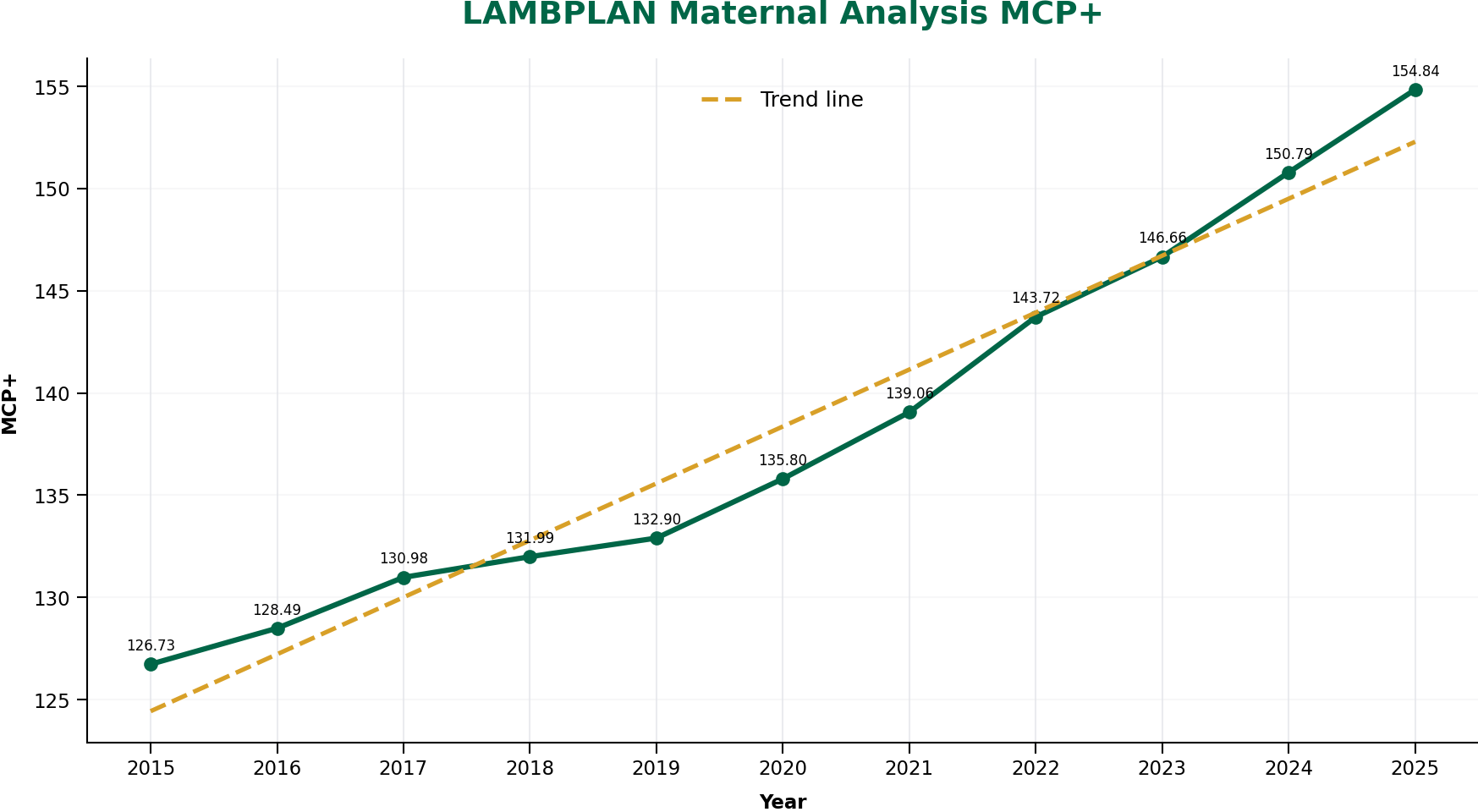
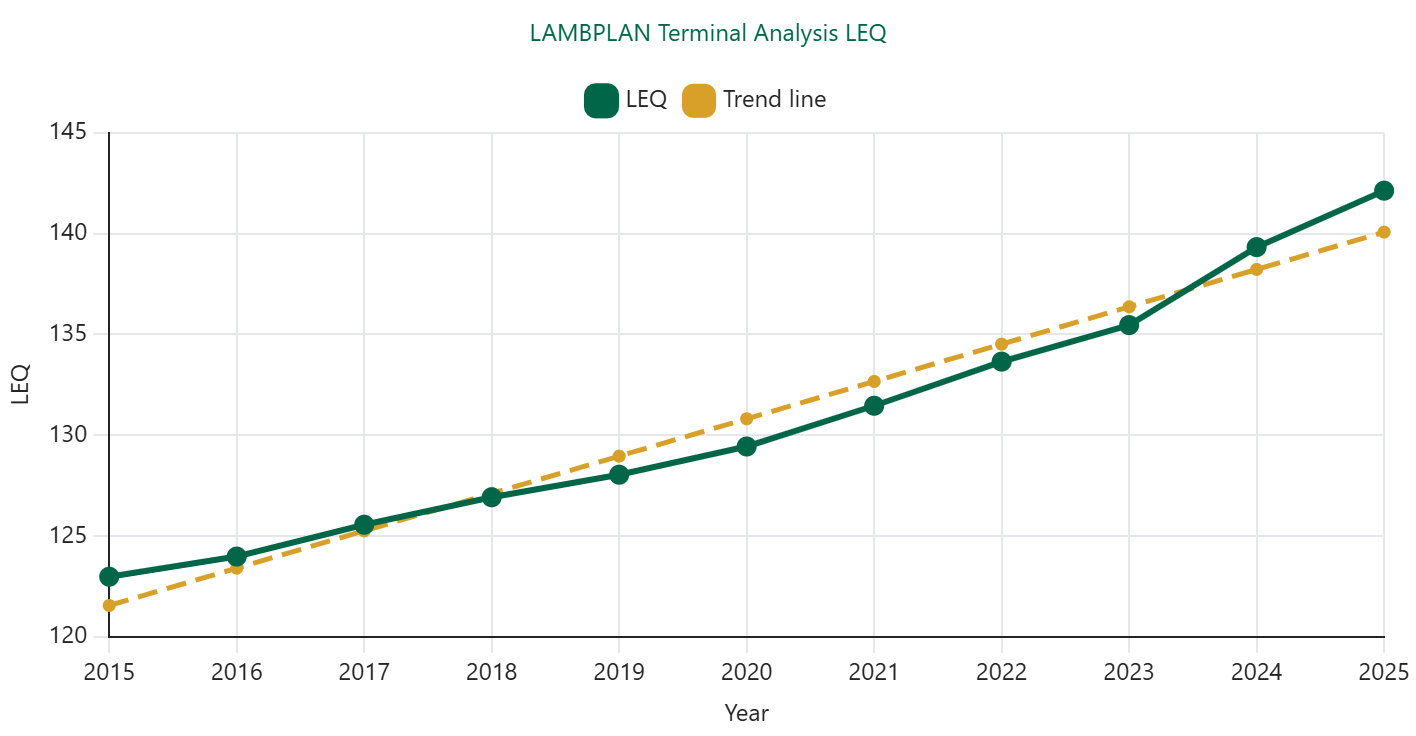
Genetic trend analyses show continued improvement across the three major Sheep Genetics evaluations, with each analysis recording sustained increases in its respective breeding objective index over the past decade. Collectively, these gains resulted in an aggregated annual rate of genetic improvement that exceeded the target of $3 per ewe per year, confirming Sheep Genetics' ongoing contribution to productivity, profitability and genetic progress within the Australian sheep industry.
The Maternal Carcase Plus (MCP+) index continued to increase during 2025-26, reflecting strong genetic progress in reproduction, growth, ewe productivity and resilience traits.
Significant gains were achieved in post-weaning growth, maternal weaning weight, eye muscle depth and reproduction, while favourable reductions in post-weaning worm egg count continued to improve flock resilience. Progress in mature ewe weight has remained more moderate relative to gains in productivity traits, supporting the industry's focus on breeding efficient and profitable maternal sheep.

Figure 7. LAMBPLAN Maternal – selection index = Maternal Carcase Plus (MCP+)
The Lamb Eating Quality (LEQ) index continued to make strong gains during 2025-26, reflecting balanced improvement across production, carcase and consumer-focused traits.
Notable progress was achieved in growth, post-weaning weight, eye muscle depth, lean meat yield, dressing percentage and lambing ease, while intramuscular fat and eating quality also continued to improve. These gains support the production of faster-growing, higher-value lambs that meet both processor and consumer requirements.
Figure 8. LAMBPLAN Terminal – selection index = Lamb Eating Quality (LEQ)
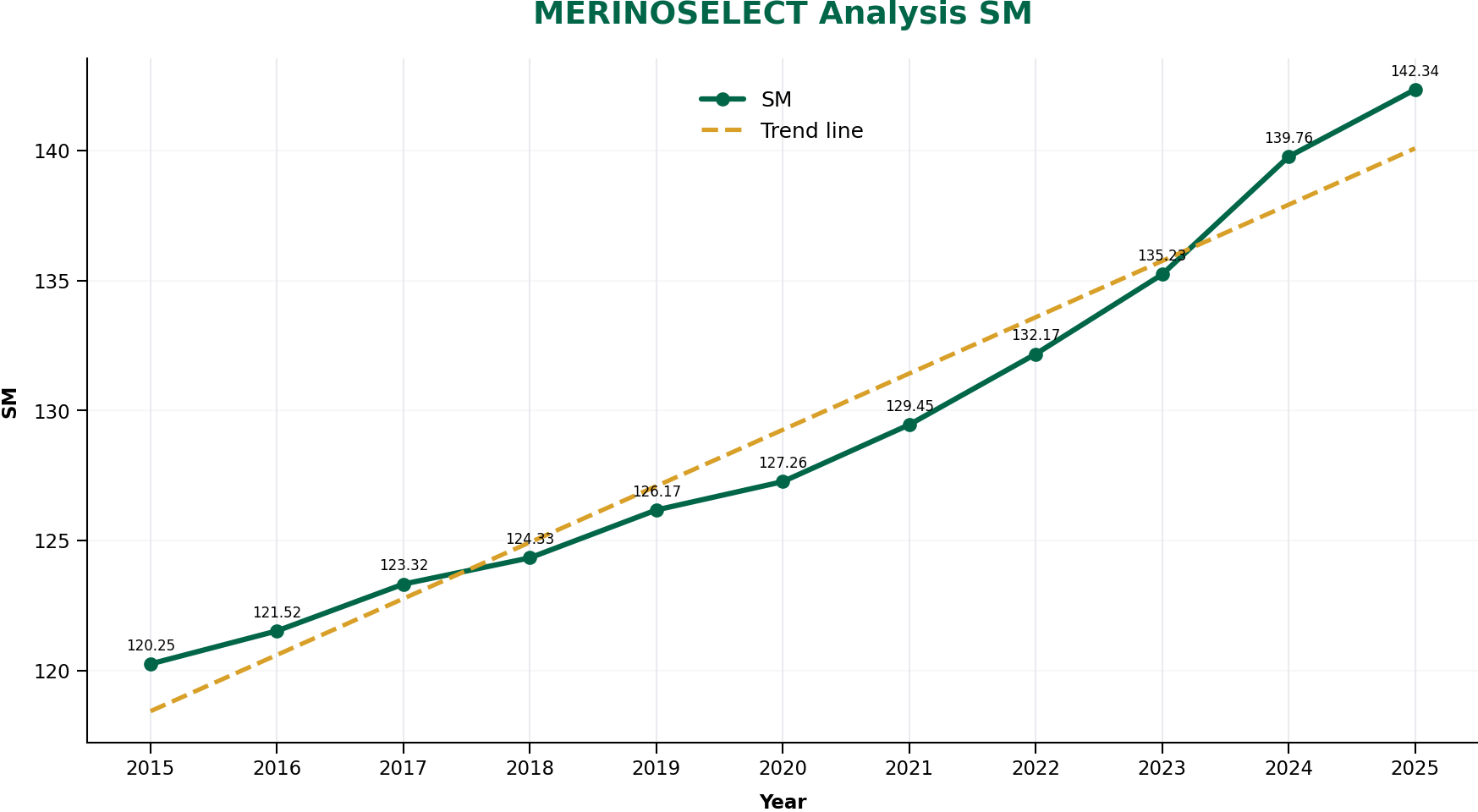
The Sustainable Merino (SM) index continued to record strong rates of genetic gain during 2025-26, with progress achieved across wool production, reproduction, carcase and welfare-related traits.
Breeders delivered substantial improvements in clean fleece weight, yearling clean fleece weight, staple length, weaning rate and lean meat yield, while also achieving further reductions in breech wrinkle. These results demonstrate the industry's continued commitment to breeding more productive, profitable and sustainable Merino sheep.

Figure 9. MERINOSELECT– selection index = Sustainable Merino (SM)
Genomic information continues to play a critical role in improving the accuracy of ASBVs, with most Sheep Genetics evaluations now operating under a single-step framework that combines pedigree, performance and genomic information in a single analysis.
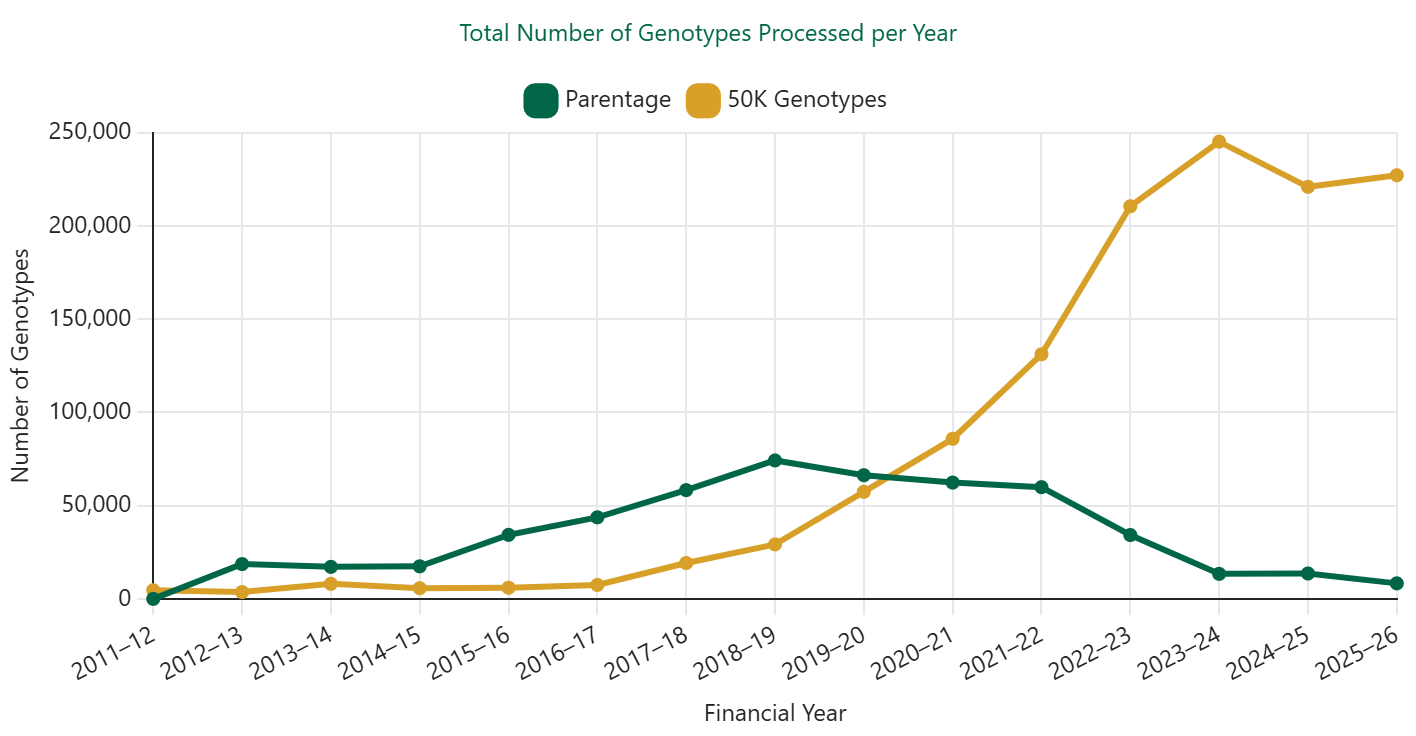
Working alongside AGBU, Sheep Genetics maintains the genomics database supporting DNA parentage testing, 50K genotyping and genomic products such as Flock Profile. In 2025–26, more than 227,000 50K genotypes were processed, reflecting the continued adoption of genomic technologies by Australian sheep breeders. While parentage testing volumes have declined as genomic testing becomes more widely used, overall genomic activity remains significantly higher than historical levels and continues to underpin improvements in genetic evaluation accuracy.

Figure 10: Total number of genotypes processed per year for parentage and 50K genotype tests
Flock Profile is a genomic benchmarking tool designed for commercial Merino producers. By comparing a flock's genetics against a large industry reference population, it helps producers identify strengths, weaknesses and opportunities for future genetic improvement.
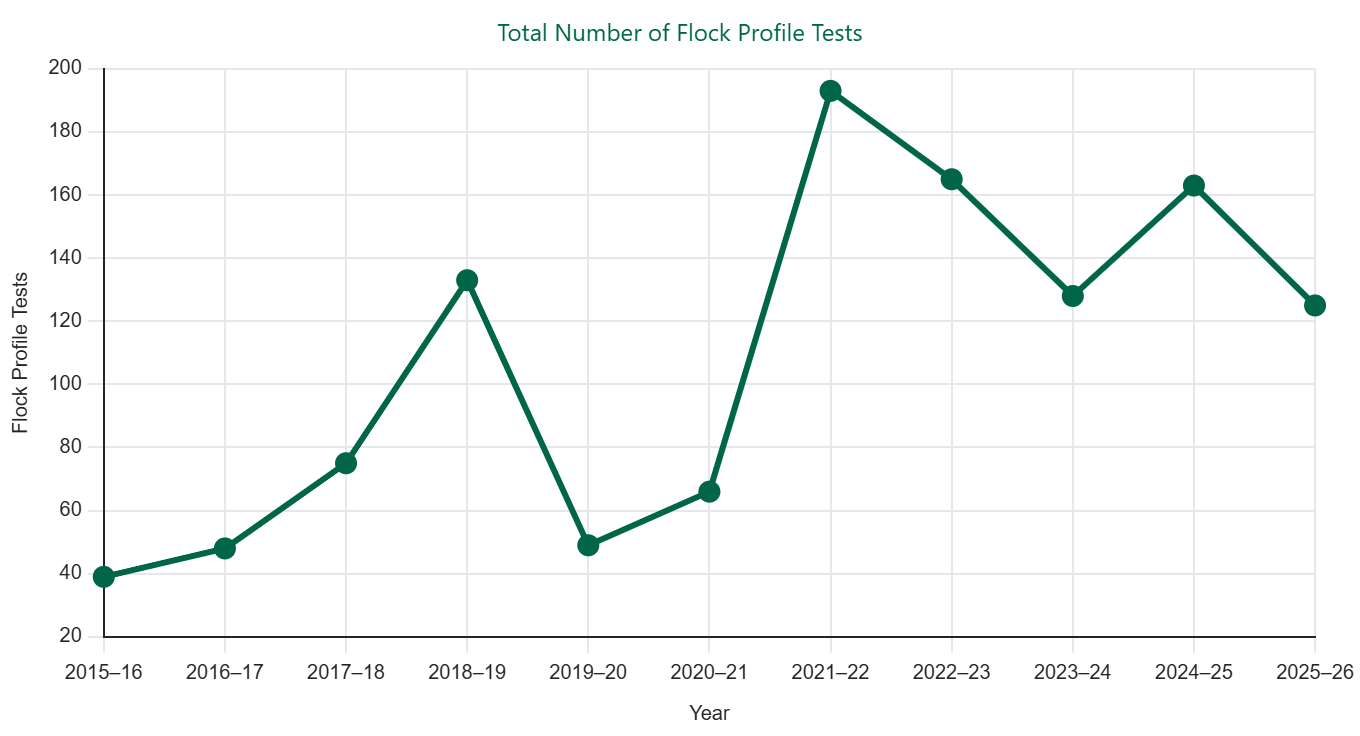
Flock Profile continued to be widely used throughout 2025–26, with 125 tests completed during the year. While this was lower than the peak levels recorded in recent years, adoption remains well above historical levels, demonstrating the ongoing value producers place on genomic benchmarking to support breeding and selection decisions.

Figure 11: Total number of Flock Profile tests
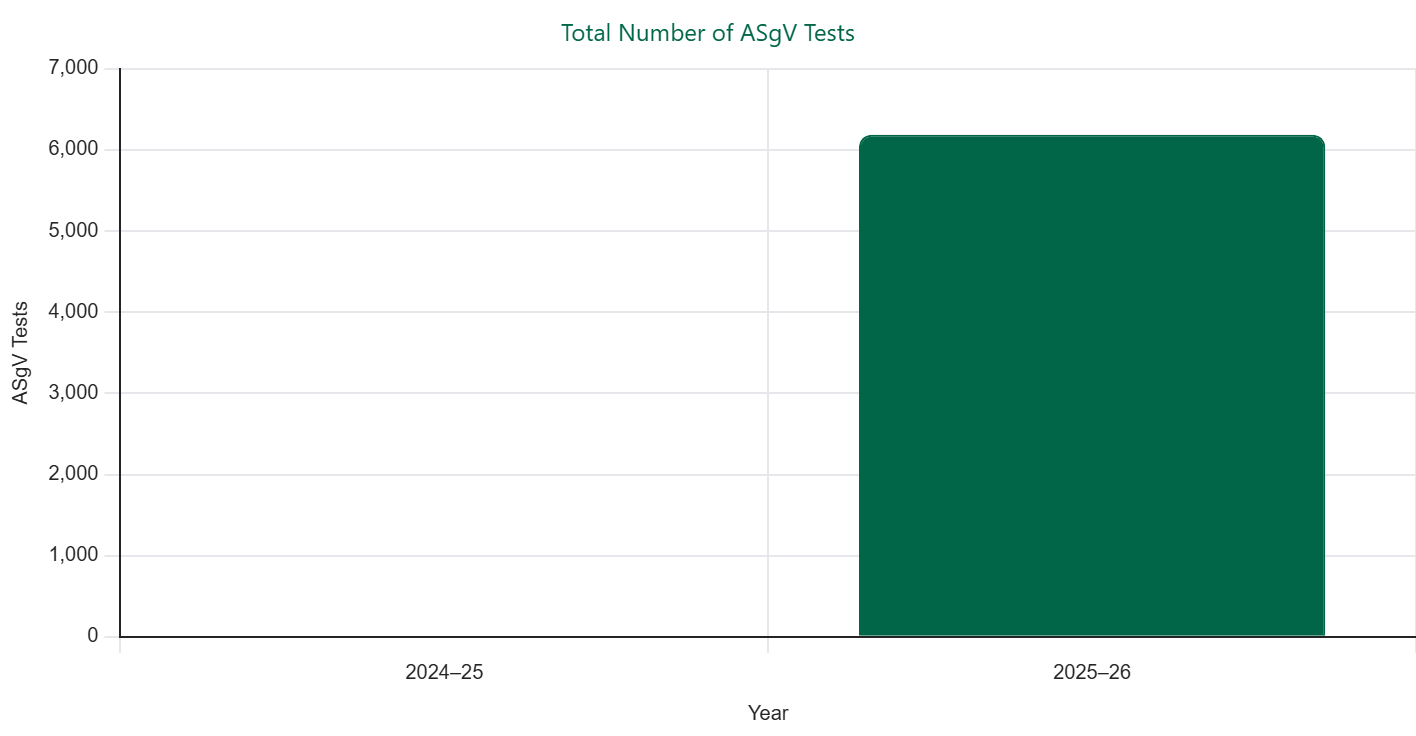
ASgV (Australian Sheep Genomic Value) testing was introduced during 2025–26, with 6,186 tests completed during the year. The strong initial uptake reflects increasing breeder interest in genomic technologies and the value of genomic information to support more accurate selection decisions and accelerate genetic gain.

Figure 12: Total number of ASgV tests